
How I Turned Biscoff Cookie Butter Into a Viral Health Food

I have become known as the “rebranding guy” on social media for my health food rebrands.
I do these videos for fun, but also as a way to educate consumers on common food labeling tricks, because there are quite a lot out there.
The message is always this: be careful what you believe on a food label, because there are many ways that companies can mislead you. Sometimes the “healthy” food you’re blindly choosing is not all that much different from the “junk” you are avoiding.
I rebrand all different types of food and drink items to illustrate this message, and every once in a while, a label rebrand will gain traction and go viral across social media.
That is exactly what happened with Biscoff Cookie Butter, which has garnered over 13 million views across all platforms.
Clearly, something resonated with consumers, so I figured we might as well take a closer look at my healthy cookie butter to see why it worked.
See the rebrand on Youtube, Instagram, or Tiktok.
Making ACTUAL Healthy Biscoff Cookie Butter Is Really Easy
Before I dive into the rebrand, I just want to give myself a little toot toot that I have a high-protein cookie butter recipe that is insanely delicious, simple, and quick.

All you have to do is blend together Biscoff cookies, milk, and a quality protein powder, and it will turn into an incredible high-protein, lower-calorie Biscoff spread.
If you want the full recipe and instructions, you can find them on my site here.
The rebrand you’re about to see makes cookie butter look healthy, but this is a way to make it actually healthy. After years of creating recipes, this has stood the test of time as one of my favorites.
Anyway, onto the rebrand…
Rebranding Cookie Butter Into a Healthy Breakfast Option
Cookie Butter, also known as Speculoos Spread or Biscoff Spread, is basically just cookies blended together with oil to create a spread or dip.
It’s cookies and oil, so of course it’s delicious. But by most definitions of the word, it is not necessarily healthy.
Well, with some clever rebranding and marketing, we can easily make it seem healthy.
Introducing: Spiced Cinnamon Cookie Breakfast Spread.
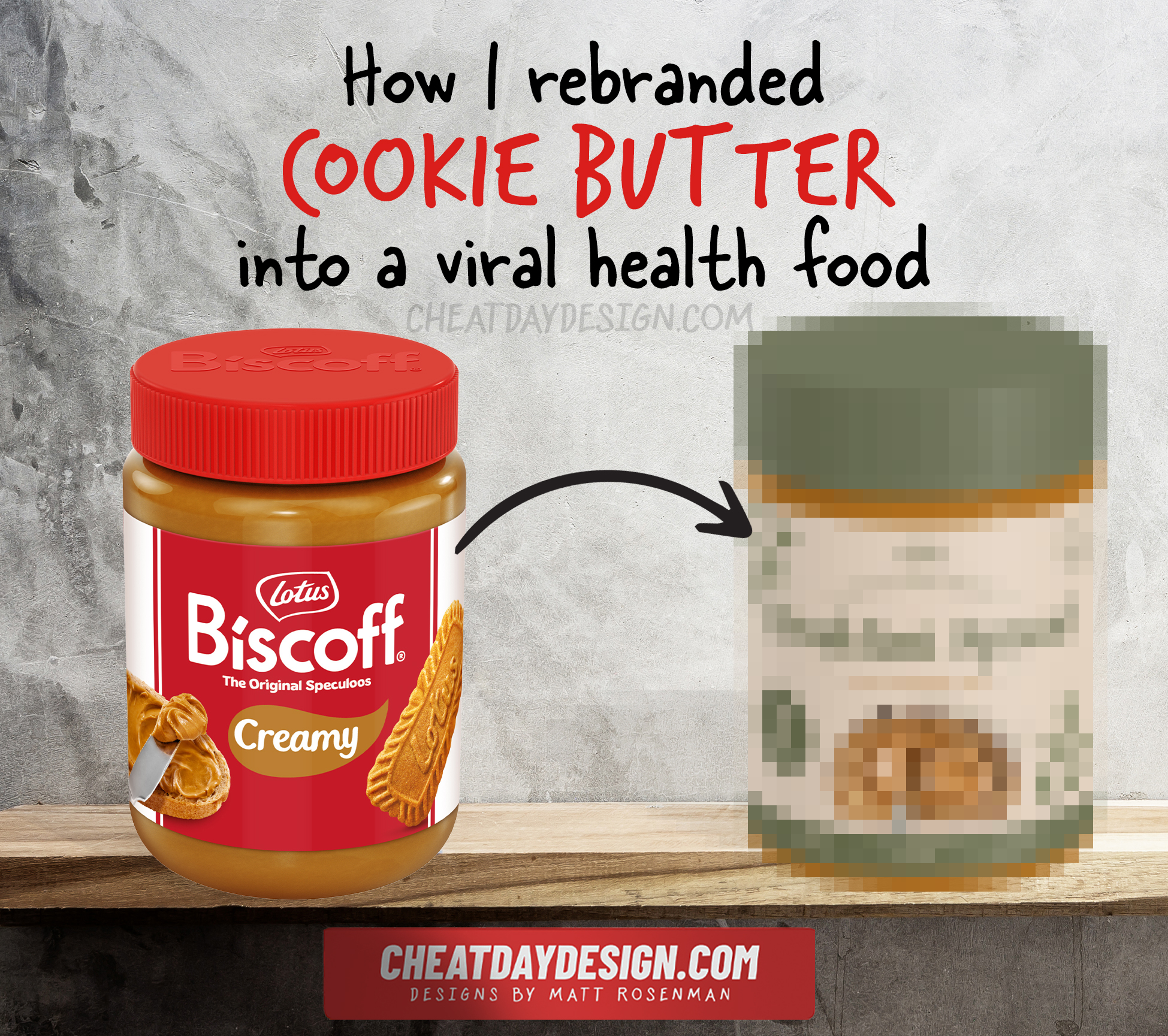
Clearly, the new version looks healthier, but why does it work? There were 5 main tactics I used for this one…
Marketing Trick #1: Changing the color scheme
Biscoff is very recognizable by its red & white packaging, but the bright red has become synonymous with snacks.
Think of food with bright red packaging: Skittles, Doritos, Pringles, Twizzlers, Kit Kat… the bright red is meant to stand out on shelves.
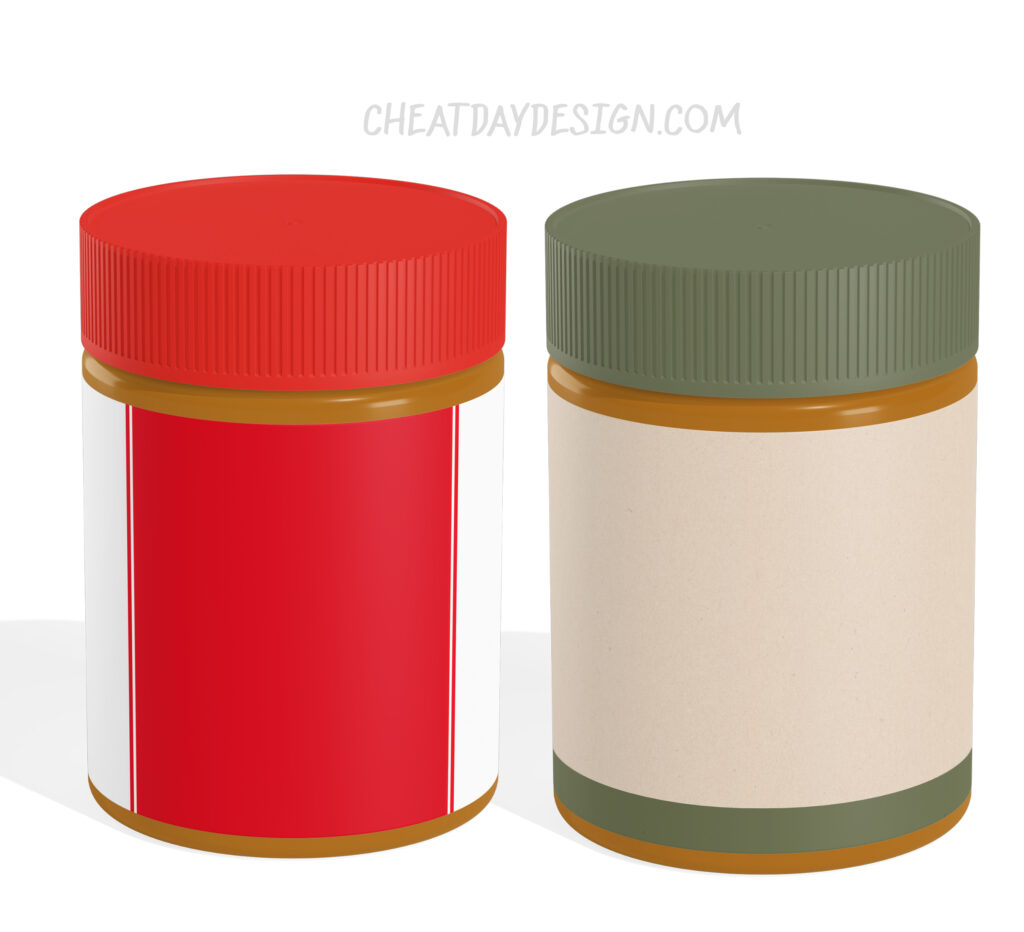
For a healthy option, you don’t want your item screaming from the shelf- you want it to feel subtle and Earthy. So I made the switch from red & white to an Earthy green and rustic paper texture.
If I remove all of the text and imagery from the labels, one of them clearly looks like the healthier option:
Marketing Trick #2: A healthy-sounding name
Is it possible to sell a product called “cookie butter” and make it seem healthy? Likely not.
For this one, I decided to lean into the idea of this as a breakfast item. Sometimes breakfast is incredibly unhealthy (let’s be real, some of our favorite pancake stacks are just an excuse to eat cake for breakfast), but by marketing something as a breakfast option, you automatically create a perception that it’s healthy.
Sure, sugary cereal options exist, but even those tout all of the vitamins and minerals that kids are getting as a part of a “complete, balanced breakfast.”
By calling this a breakfast spread and changing the flavor from Biscoff cookie to “spiced cinnamon cookie,” we completely change the perception.
Marketing Trick #3: Healthy imagery
One of the most powerful aspects of any food label is the main image. If done correctly, it can completely shift the way a consumer views a product.
Let’s think of a random example like granola. If there are two identical products on the shelf, but one of them features granola sprinkled over a fruit parfait, and another features a bowl of granola with milk being poured over the top, which one feels healthier?
It’s all in the implied usage.
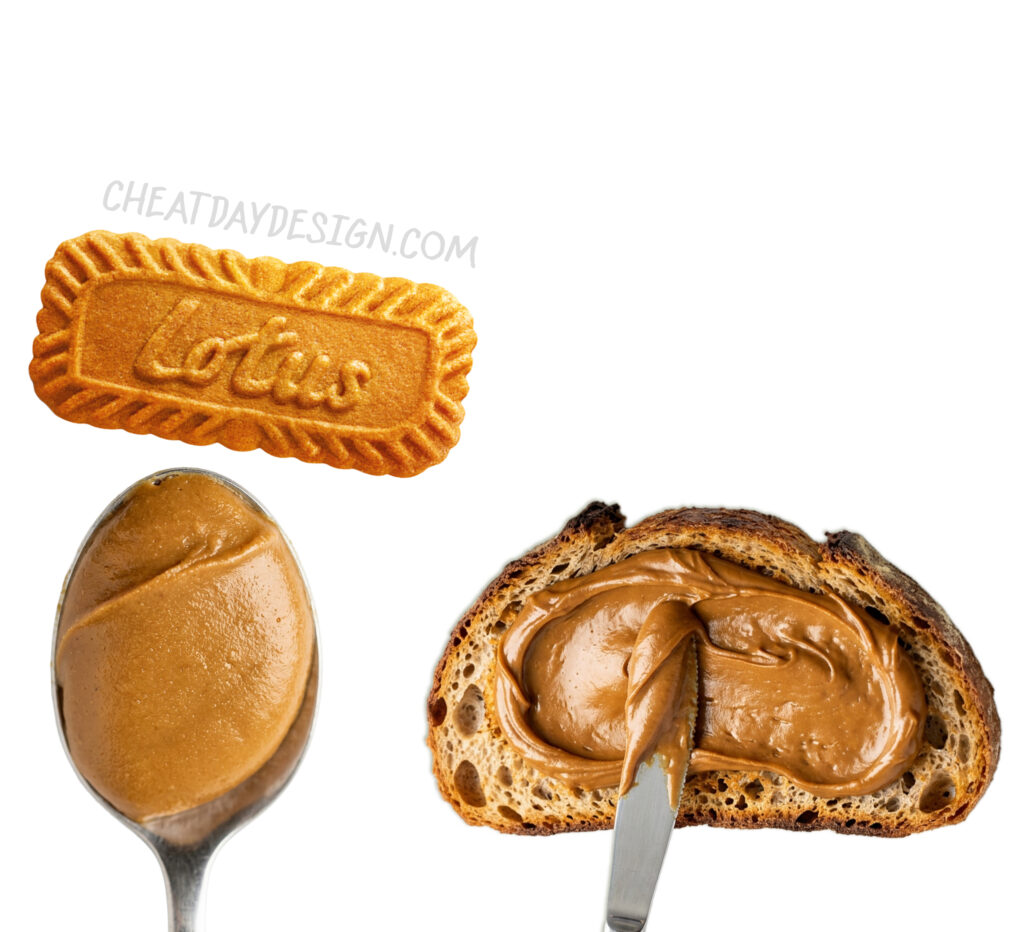
For healthy cookie butter, instead of utilizing a Biscoff cookie or spoonful of cookie butter, I decided to showcase the spread over a slice of sourdough toast. Even the choice of bread is a tactic here, because a rustic slice of sourdough feels much healthier than a slice of sandwich bread.
Marketing Trick #4: Highlighting simplicity
Cookie butter is truly simple to make: it’s Biscoff cookies, canola oil, sugar, soy lecithin, and citric acid. That’s 5 ingredients total, even though Biscoff cookies are comprised of many other ingredients.
Because of that, we can lean into the simplicty of the product, highlighting “five simple ingredients” right on the front of the label.
Are the ingredients healthy? Not necessarily. But if you call out the simplicity of the product, it implies that the product is healthier, especially if you add that callout within a simple heart outline.
Marketing Trick #5: Leaning into the “natural” components
That last labeling trick for this healthy cookie butter is leaning into the fact that the product is natural.
Using natural or all-natural on a label is still the Wild West of the labeling world because there is no legal definition as to what is considered natural.
Is sugar natural? Technically, yes, because it’s derived from natural sources, even if it is heavily processed after the fact.
Because of this, I was able to highlight “made with natural ingredients” front and center, with an additional callout of “nothing artificial” lower on the label.
Would This Healthy Cookie Butter Actually Work?
If Lotus (the company that makes Biscoff) wanted to bring this rebrand to life, could they?
Technically, yes they could. Everything on this label is 100% true and compliant with FDA guidelines.
However, this specific product would not fly. While all of these labeling tricks are used every day on products, using them all together on a single product would raise many red flags.
Consumers can easily be tricked, but they’re not dumb, and they would quickly realize that this is a blatant attempt to mislead them. And that’s the one caveat: if you are clearly trying to deceive consumers, you’re going to get hit with a lawsuit, and you’ll likely have to pull the product or make label changes.
These lawsuits happen all the time, but you often don’t hear about them because the resolution is a subtle label change that you wouldn’t even notice.
In any case, while this specific label wouldn’t fly with consumers, the tricks I used are very real, and very common.
We’re all susceptible to it. Even I am, and this is what I do for a living.
I guess that’s why it resonated with so many people.
